

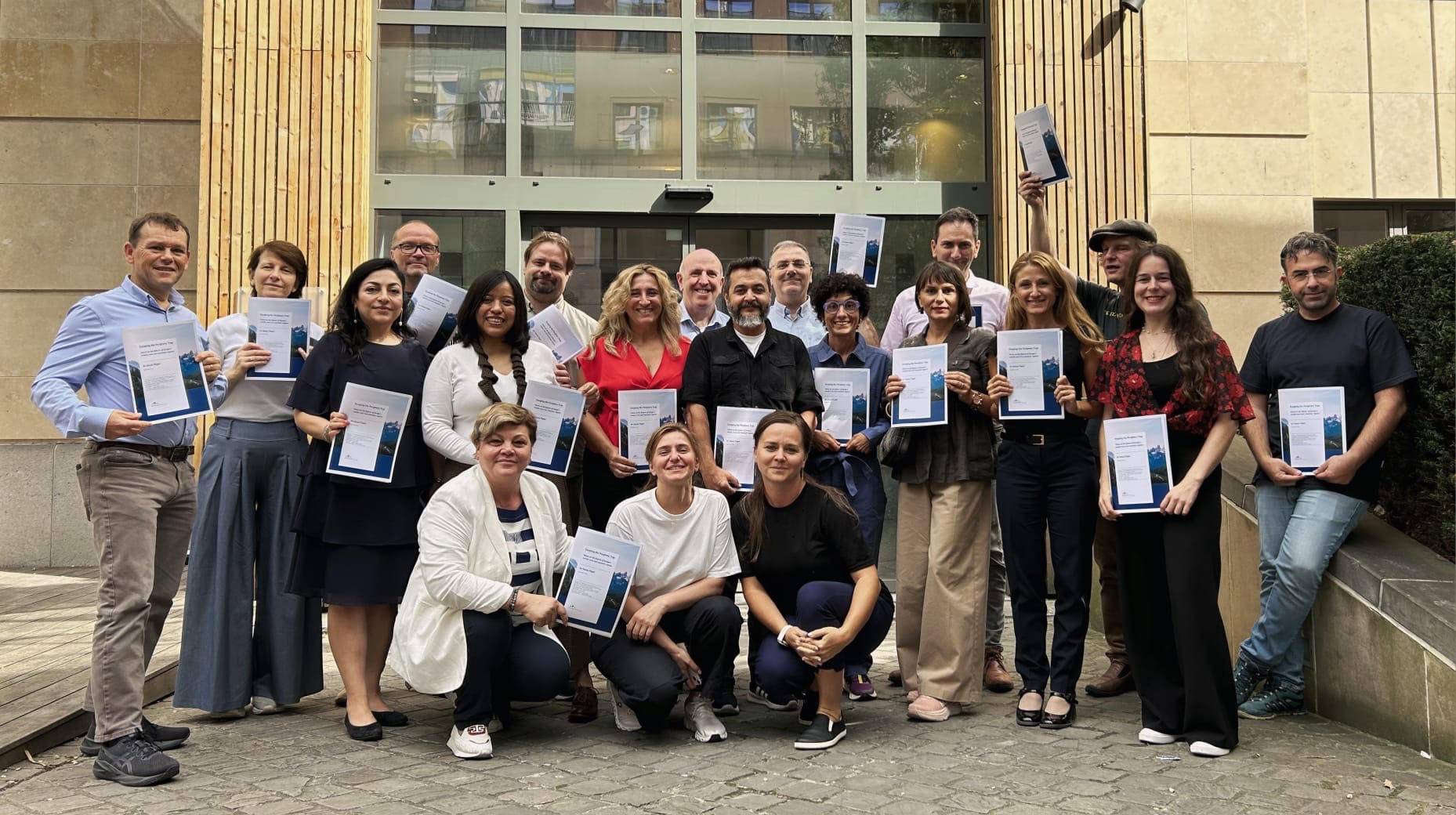
New MARGISTAR Issues Paper: Escaping the Periphery Trap
MARGISTAR has published a new Issues Paper, Escaping the Periphery Trap: Voices on the futures of Europe’s remote rural and mountain regions, exploring the choices that will shape these territories over the next 10-20 years.
The paper brings together the perspectives of 40 experts from 18 European countries, using a structured strategic-foresight exercise to examine critical challenges, possible futures, near-term priorities and the major changes needed to create more resilient mountain regions.
A clear picture emerges. Demographic decline, shrinking services, limited economic opportunities, environmental pressures and weak institutional capacity are not separate problems. They reinforce one another, creating what MARGISTAR describes as the “periphery trap.” Breaking this cycle requires policies that work across sectors and over the long term, rather than isolated interventions.
Contributors broadly agree on the need for place-based approaches, essential services, digital connectivity, more diversified local economies, stronger community agency and long-term investment. But the paper also highlights genuine choices and trade-offs: between conservation and active stewardship, tourism growth and diversification, major infrastructure and environmental protection, and between the opportunities of the green transition and the risk that mountain regions once again become places where value is extracted rather than retained locally.
Perhaps the strongest message is a change in perspective: Europe’s mountain and remote rural regions should not be treated simply as disadvantaged territories requiring compensation, but as strategic assets central to Europe’s water, biodiversity, food, energy, climate resilience and wider sustainability transitions.
The paper invites policymakers, researchers and mountain communities to engage with these choices—and with a central question: how can mountain actors be enabled to shape Europe’s transitions, rather than simply experience them?