
Simo Sarkki (Natural Resources Institute Finland (LUKE), Finland), Renata Pacheco (IRTA, Sustainability in Biosystems, Spain), Irene Christoforidi (Department of Agriculture, Hellenic Mediterranean University), Rajesh Nautiyal (University of Lincoln, UK), Maria del Carmen Solano Báez (University of Murcia, Observatory for Rural and Local Development and Employment, Spain), Elena Todorova (Forest Research Institute – Bulgarian Academy of Sciences, Bulgaria), Manikandan Ariyan (University of Tartu, Estonia), Federica Romagnoli (GLOMOS, EURAC Research, Italy), Ana Margarida Silva (Centre for Intercultural Studies (CEI, ISCAP-P.PORTO), Matosinhos, Portugal), Naveed Imran (University of Oulu, Finland), María Viota (University of the Basque Country), Hakan Yasin Özdemir (Düzce Municipality / University, Türkiye)
Researchers are constantly seeking not only to produce academic papers, but also to harness societal impacts. A central barrier to achieving meaningful impact in science lies in the persistent disconnection between science, policy, and society. Oftentimes, policymakers are busy, bound by schedules of their decision cycles, or flooded by evidence delivered by researchers. There is a need to get the attention of policymakers and awaken them to consider common problems from new perspectives. In MARGISTAR, we propose that ‘pinching’ is a plausible way to do so.
Pinching policymakers is a concept in incubation within the MARGISTAR COST Action. It implies the need to create safe yet challenging spaces for interacting with policymakers by deliberating on the practical outcomes of existing policies and agendas to communicate potentially transformative initiatives and enhance virtuousness in decision-making.
What distinguishes pinching from more conventional science–policy–society interface approaches? It is explicitly normative and has ‘tensional’ character. Pinching can be done by using playfulness as a means to awake policymakers’ interests, by recognising emotional aspects in science-policy-society communications, and by opening-up deliberative spaces while simultaneously pointing towards solutions.
Pinching means engaging policymakers in ways that both challenge and inspire them to think differently and frame problems in new ways to motivate action. It is about creating encounters that make complex issues tangible, relatable, and harder to ignore.
MARGISTAR’s three-day training school, “Pinching policymakers for revitalizing European mountainous regions”, organised at the University of Oulu and Rokua National Park in Finland March 17 to 19, sought to advance the idea and concept of pinching policymakers. The training school included 16 participants from across Europe, and five trainers from MARGISTAR, the University of Kassel, Germany, and the University of Aalto, Finland.
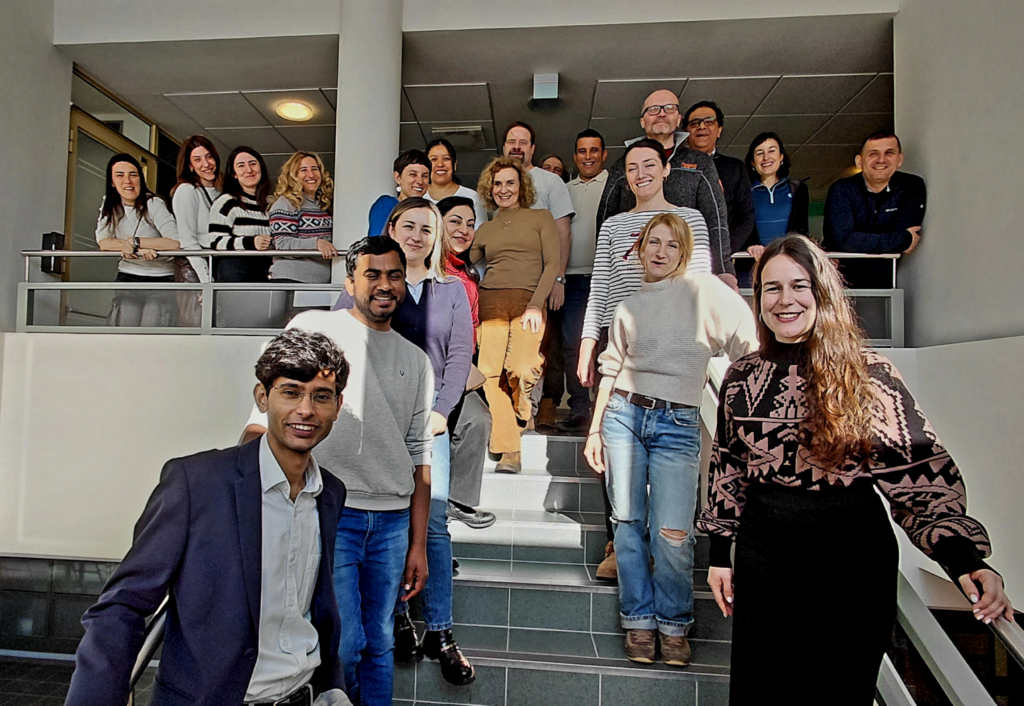
The training school was designed around three learning modes: 1) a ‘Pinching Policymakers’ seminar, 2) work in small groups, and 3) playing a simulation game called REGULANDIA.
The ‘Pinching Policymakers’ Seminar at the University of Oulu
The ‘Pinching Policymakers’ seminar started with introducing the incubating concept of pinching policymakers by MARGISTAR leaders and researchers. Two keynote presentations covered science-policy-society relations at a European level focusing on 1) directions for sustainability in turbulent EU policy, and 2) Science4Policy from the perspective of the European Commission’s Joint Research Center.
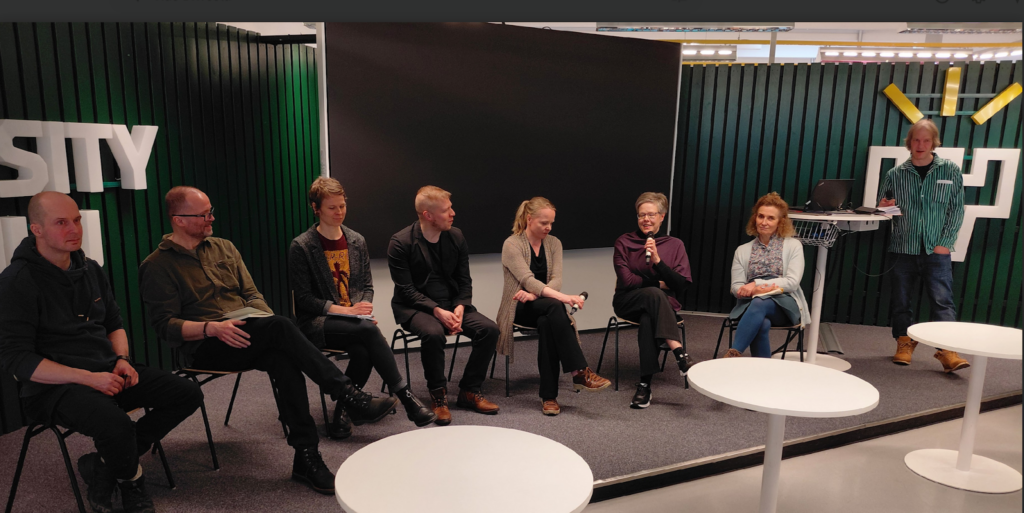
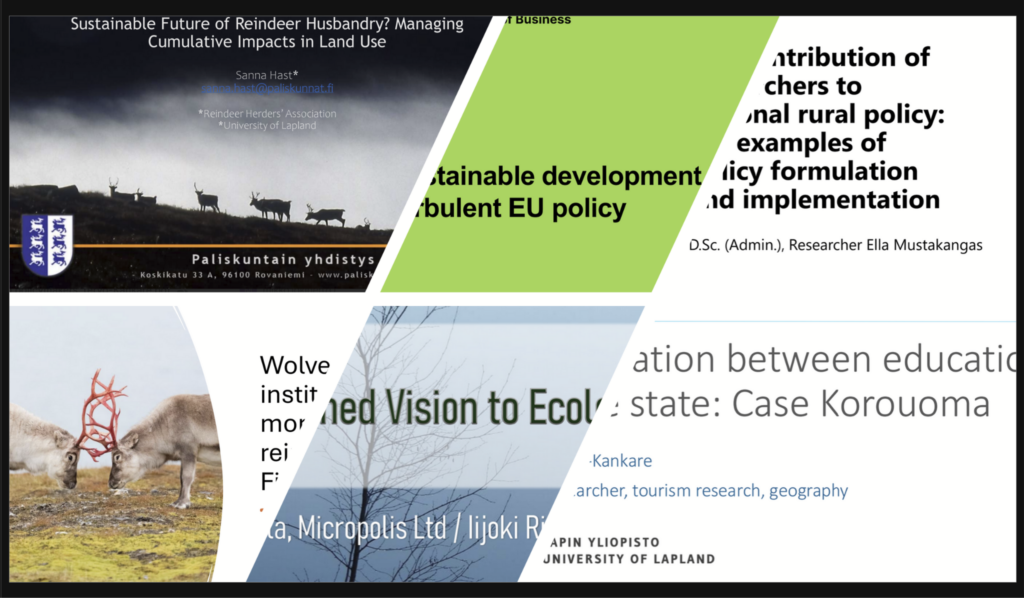
A set of five presentations addressed key issues for rural development in northern Finland from the science-policy-society perspective. The presentations covered themes connected to 1) cumulative land use impacts on reindeer herding, 2) links between institutional solutions to manage wolverine populations and reindeer herders’ relations to wolverines, 3) collaborative development of watershed-level visions by multiple stakeholders, 4) interlinkages between rural researchers and rural policy, and 5) science-policy-practice collaborations in tourism development. The day ended with a panel discussion with the speakers, and final reflections.
Pinching Through Dance Movement
The process of pinching was introduced to participants both through traditional and innovative methods. Typically, educational practices around topics like pinching rely on verbal instruction or demonstration by experts. However, in this instance, the traditional approach was enhanced by integrating a unique element, participants were guided through a step-by-step dance created by Simo Sarkki. The dance involved a series of coordinated movements that reflected the steps of the pinching process. This approach not only facilitated the participants’ understanding of the pinching technique, but also provided a fun, interactive experience that encouraged engagement and social connection.
This inclusion of physical movement in learning aligns with the concept of ’embodied learning’, which suggests that physical activity can deepen cognitive understanding and improve information retention. By physically enacting the steps of pinching, participants were able to engage both their minds and bodies, reinforcing the learning process through active participation. Moreover, the social aspect of performing the dance together helped reduce barriers to participation and created a supportive, community-based learning environment. As the participants laughed and shared in the experience, they developed a sense of camaraderie, which led to improved motivation and greater willingness to engage with the content.
Group Work: Weaving Connections to create Pinching Messages
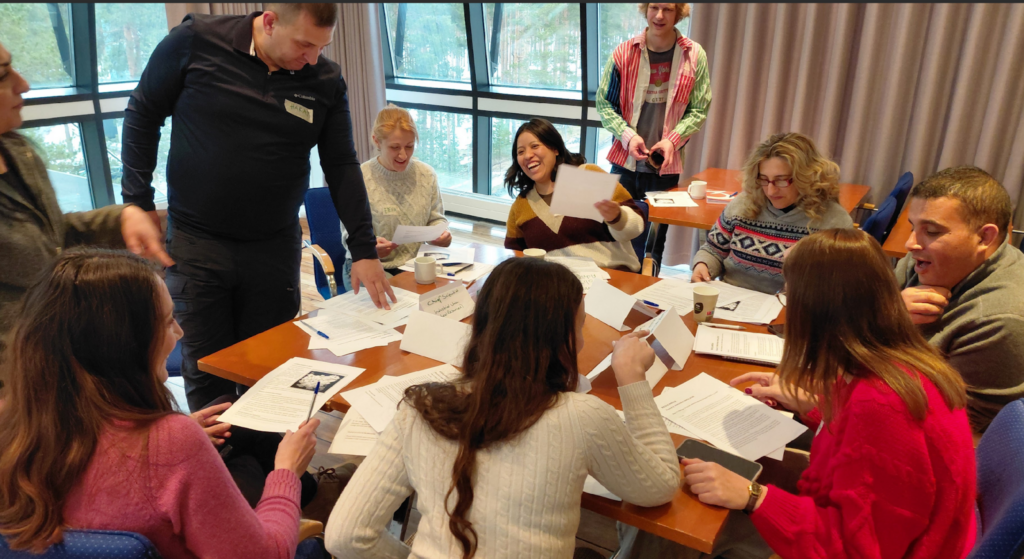
The second day of the training school started with speed dating, where participants were paired and pitched their ideas to each other in one minute, followed by a one-minute dialogue. The purpose of the speed dating session was to get participants to train elevator pitches, and it functioned as a basis for forming small groups with similar research interests.
The 16 participants formed four groups and had about 3 hours to complete their task: 1) identify a problem, 2) identify targeted policymakers, 3) generate key messages for those policymakers, and 4) design a process to deliver the messages. The groups then presented their ideas to trainers who acted as the policymakers chosen by the groups. The trainers challenged the ideas of the groups by wearing policymakers’ hats.
All four groups employed distinct methods of conveying their messages and adapted their presentations in a variety of ways, ranging from storytelling to presenting ideas to ‘UN officials’. This diversity in approaches resulted in a clear understanding of how each group incorporated various discussions within their respective teams. The variability in presentation styles was essential, as it demonstrated that each group fostered participation from individuals of diverse cultural backgrounds. The multicultural nature of these teams provided a broader, more nuanced understanding of the issues at hand. This diversity was further enriched by the wide range of academic disciplines represented within each group, allowing for a thorough and multifaceted exploration of the topic.
Box 1. Overview of the topics of small groups.
| Group 1 proposed to establish a global convention on mountain development in order to address multiple simultaneous problems faced by mountainous regions, and trainers were asked to play UN officials. A central focus was placed on mountain communities and their knowledge systems, particularly in relation to geophysical systems and biodiversity. These local knowledge systems were considered critical in identifying risks and hazards in mountain regions. The group then shifted towards discussing governance models, advocating for a shift from top-down approaches to one that respects and integrates the knowledge systems of these communities. Recognising the tendency of existing systems to overly rely on Western knowledge frameworks, the group proposed a more inclusive approach by incorporating the knowledge systems of mountain communities. This, they argued, would enable more holistic policy-making that incorporates both scientific and indigenous knowledge, underpinned by a systems-based approach. Ultimately, the group critically evaluated the three existing pillars of sustainability, advocating for a more comprehensive and integrated model. Group 2 sought to address the degradation of mountainous areas, emphasizing how rapidly this process is unfolding, its often irreversible nature, and the sense of time slipping away. They illustrated the urgency of action by placing a snowball in a trainer’s hand, allowing it to melt as a physical expression of time slipping away – a demonstration of ‘pinching policymakers’ to prompt immediate and decisive solutions. Group 3 proposed stronger bottom-up processes and integrated multi-level governance to tackle overtourism and avoid local regions from becoming ‘Rural Disneylands’, focusing on Uzungöl and its Special Environmental Protection Area as a case study. The team presented core messages and ideas to open a dialogue of cooperation and collaboration with policymakers. In this process, they identified the dilemmas of development, aware that local stakeholders “want the benefits” but not the environmental pressures that come with them, criticizing top-down, externally imposed planning models and advocating instead for local, participatory, bottom-up solutions. Their proposal included: mapping key actors through sociograms and Social Network Analysis (SNA), formalising a multi-level and multi-actor governance system, and conducting a participatory diagnosis to prioritise tourism issues. This approach seeks to move from passive data collection to active community engagement, promoting public consultations for future tourism strategies and implementing participatory budgeting to facilitate democratic decision-making and support for local initiatives. Group 4 formed a coalition of a professor, a NGO and a local village representative and called for raising awareness towards the multiple benefits of forests to avoid forest loss and the degradation of forest ecosystems focusing on Ukraine. Their “Forest is Life” approach focused on a participatory national forestry plan that integrates local knowledge with scientific evidence. It also emphasized relational values and intangible dimensions such as cultural ecosystem services and the sustainability of life, recognising forests not only as resources, but as living systems embedded in social and cultural fabrics. |
REGULANDIA: A Science-Policy-Society Roleplay Game
REGULANDIA is an interactive simulation game where participants play predetermined roles and can innovate within the boundaries of the instructions given to them. The game is an adapted version of the European Commission’s Joint Research Center’s (JRC) science-policy shale gas game. The modifications for the game were done by Mahsa Motlagh, who facilitated the game, and Simo Sarkki. The JRC’s game was adapted to training school themes, which are 1) remote mountainous regions, 2) the link between EU and local decision-making, and 3) the aim to understand how science-policy-society dialogues may unfold in practice.
REGULANDIA was a topical theme for many EU policies, including the Critical Minerals Act and the so-called Omnibus initiative to speed up environmental impact assessment processes as part of the ongoing simplification of EU regulations.
The REGULANDIA game was based on an idea that pinching policymakers can take place by making them confront the impacts of their high-level policy decisions at the practical level through stakeholder dialogue.
The game included two rounds. In the first round, a formal science-policy situation was provided in which players had to decide whether legislation for speeding up environmental impact assessment processes was adopted. The second round consisted of a simulation of a stakeholder meeting in which a new mine had been granted permission following the sped up environmental impact assessment process.
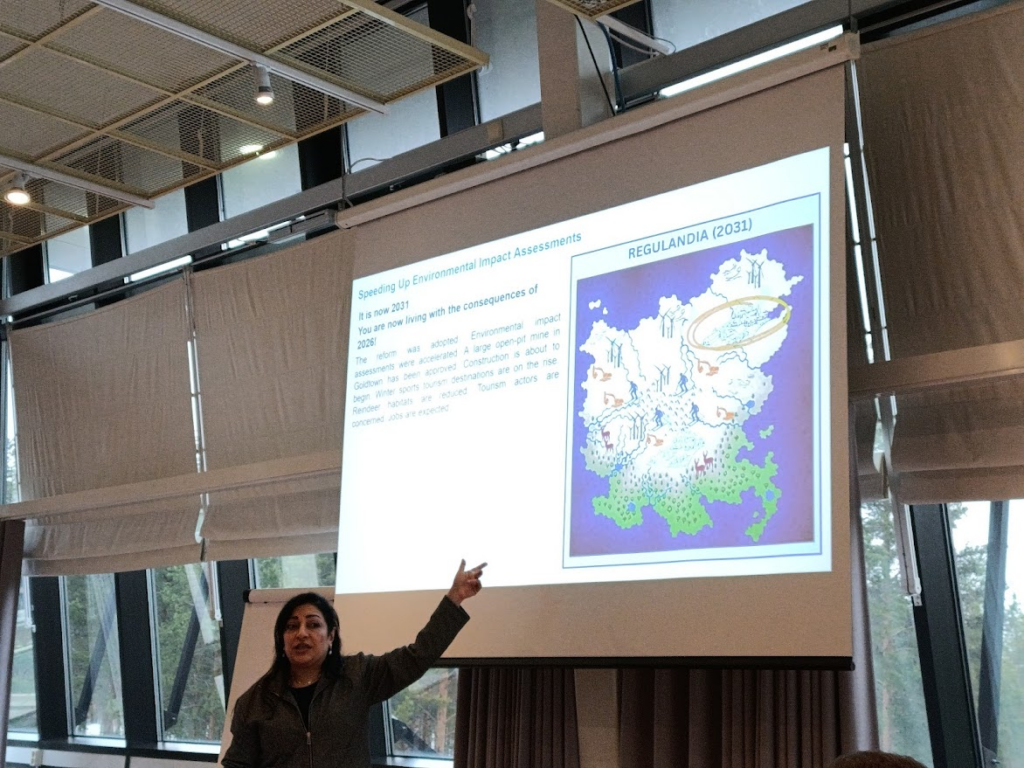
Participants were given different roles in the two rounds of the game, which allowed them to put themselves in the shoes of different stakeholders. This prompted them to reflect on the different arguments and perspectives involved in the decision-making process. The participants delved deeper into how conflicts arise, how consensus is sought, and how decisions are ultimately made.
The game offered a meaningful reference to the ‘pinching policymakers’ process as it replicated the complexity of real-world governance, highlighting competing interests, conflict emergence, and the challenges of reaching consensus under time-sensitive or urgent conditions. On another level, it evoked emotions, but also required reason and justification. The participants had to defend positions they were not always aligned with personally, which required more nuanced reasoning and stronger critical thinking.
Defining Pinching: A Working Definition from the Training School
On the final day of the training school, participants immersed themselves in a deep, collaborative discussion aimed at crafting a working definition of pinching – drawing on the rich activities developed over the three days and their own experiences of transdisciplinary project collaborations. Through lively exchange and critical reflection, the group converged towards a shared understanding: pinching is a purposeful initiative by science and society actors to prompt government action, combining attention-focusing (tagging), preparedness-testing (probing), and action-cueing of policy- and decision-makers. These processes carry emotional, ethical, and scientific dimensions, and are typically designed to be situation-specific, reasonably intensive, collaborative, even playful – and are ultimately targeted at improving living conditions for all.
Training School Evaluation
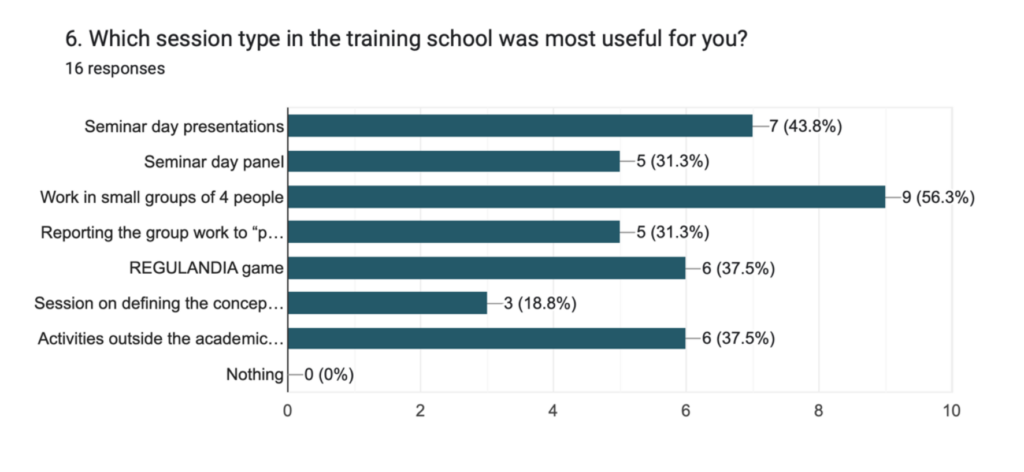
Participants provided highly positive feedback after the training school. As part of the evaluation process, attendees were asked via a structured questionnaire to identify the most useful sessions, with the option to select up to three responses, as shown in the following graph.
An open-ended question regarding the most significant learnings from the training school highlighted several common themes:
- Learnings about pinching included that “pinching is not punching”, highlighting small strategic actions in contrast to more aggressive strategies to influence policy (2 responses), that pinching is not easy, and can be done also by groups of diverse actors (4 responses), and that influential pinching strategies may vary across governance contexts (1 response).
- The importance of cooperation between multiple actors and the relevance of responsibility when solving common problems (3 responses).
- The importance of clear, timely, and actionable messages for policymakers (1 response), using the right channels to communicate with policymakers (1 response), and persistence when seeking to influence policy (1 response).
- The need to understand the diverse motivations of others when making arguments at the science-policy-society interface (1 response), and that such arguments are connected both to emotions and scientific facts (1 response).
The importance of learning by playing the REGULANDIA game was also highlighted (1 response).
Box. Reflections on the training school by Carmen Solano and Hakan Yasin Özdemir
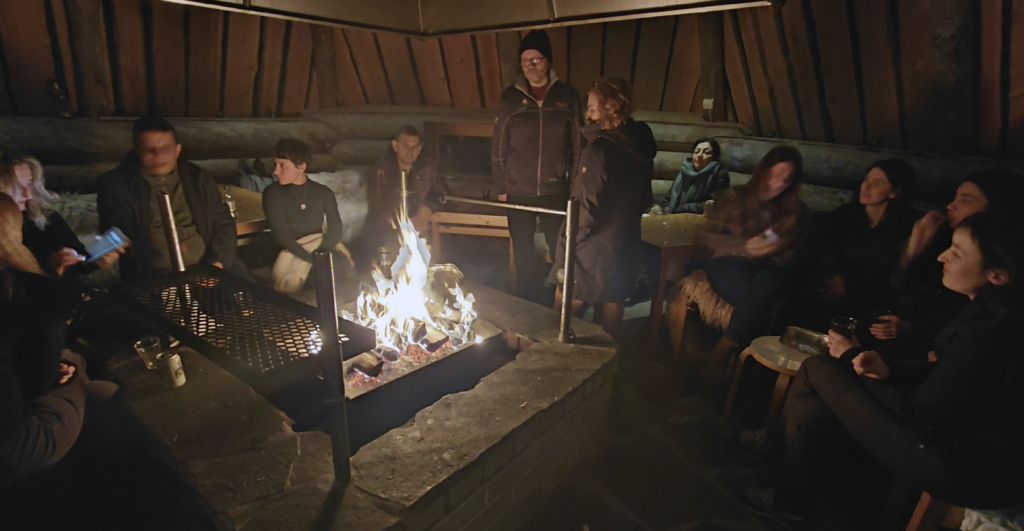
| Reflections by Carmen Solano The workspaces and their resources were exceptional. Everything was impeccably organised, and the schedule ran perfectly on time. I particularly enjoyed the discussion sessions; the friendly and fun atmosphere you created was the perfect environment for learning through collaboration and play. Each session offered different tools, whilst the seminars gave us an insight into actual experiences, working in small groups helped to foster in-depth discussions and to develop proposals collaboratively, drawing on a multidisciplinary yet shared perspective, and the simulation exercise allowed us to see things from a different perspective which, in my case, was completely contrary to my own view. The break activities offered balance between work and relaxation. It is always a pleasure to engage with researchers outside of a formal academic context. What’s more, I was delighted by the unique touch of serving smoothies, cookies, and sharing your local culture through treasures like cloudberries. It was such a treat. It’s hard to pick a favorite detail, from those local flavours to the cozy atmosphere by the campfire. Thank you so much for the warm welcome and for sharing these local treasures with us. Reflections by Hakan Yasin Özdemir The training school in Finland demonstrated that research should not only be communicated to decision-makers, but also that concrete interaction should be established. As an internal auditor, I see the concept of ‘pinching’ as a strategic tool used to increase accountability in systems and address shortcomings. |
Follow-Up Activities
The training school did not end the onsite three-day learning event, but continued through the collective writing of this blog and a journal paper. The paper will seek to further define the concept of pinching policymakers through the means of collaborative auto-ethnography. All participants of the training school are invited to write 1-5 page interdisciplinary and intersectional reflections on the concept of pinching. In addition, the texts elaborate the concept of pinching based on these reflections. These reflexive texts will be analysed by content analysis and transformed into a paper to be submitted to a peer reviewed journal.