
Ana Margarida Silva, researcher at the Center for Intercultural Studies, ISCAP-P.PORTO, is currently doing her PhD in Cultural Studies at the University of Santiago de Compostela with a focus on the study of the Portuguese Cultural territory of Serra da Estrela.
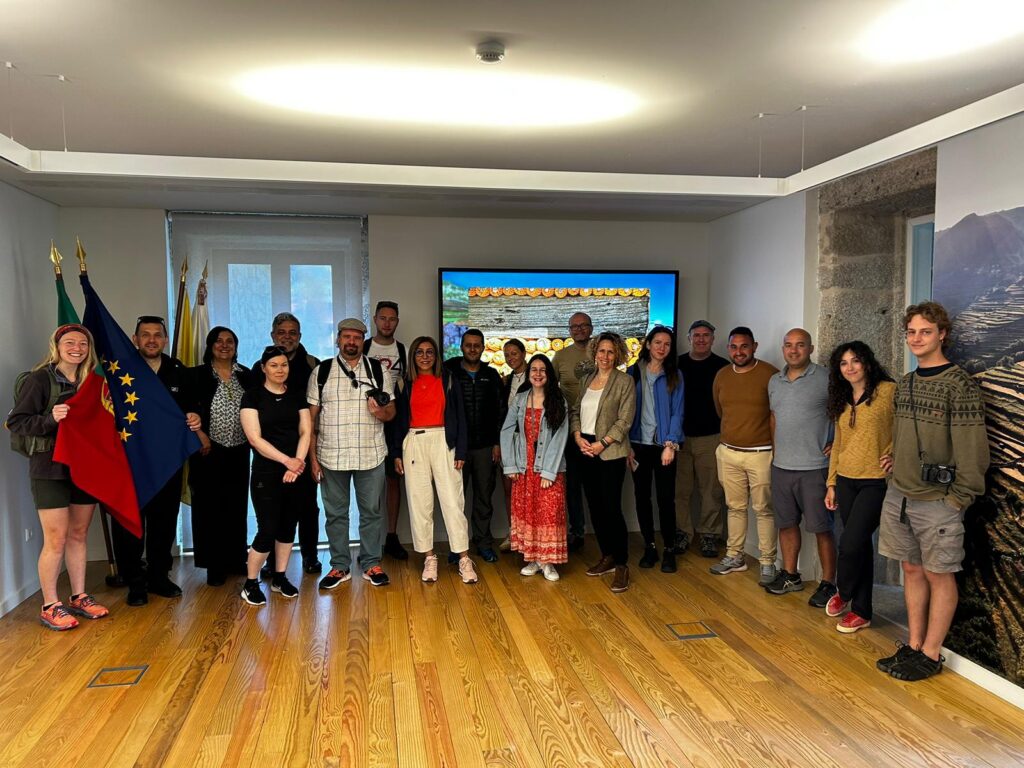
From 11-13 June 2024, the MARGISTAR COST Action organised its first Training School in Arcos de Valdevez, Portugal, in the Peneda-Gerês Transboundary Biosphere Reserve. This event brought together researchers, practitioners, and stakeholders from across Europe and provided an opportunity to explore the challenges affecting Portuguese and European mountain regions, develop new analytical approaches and reflect on pathways towards more resilient and sustainable futures.
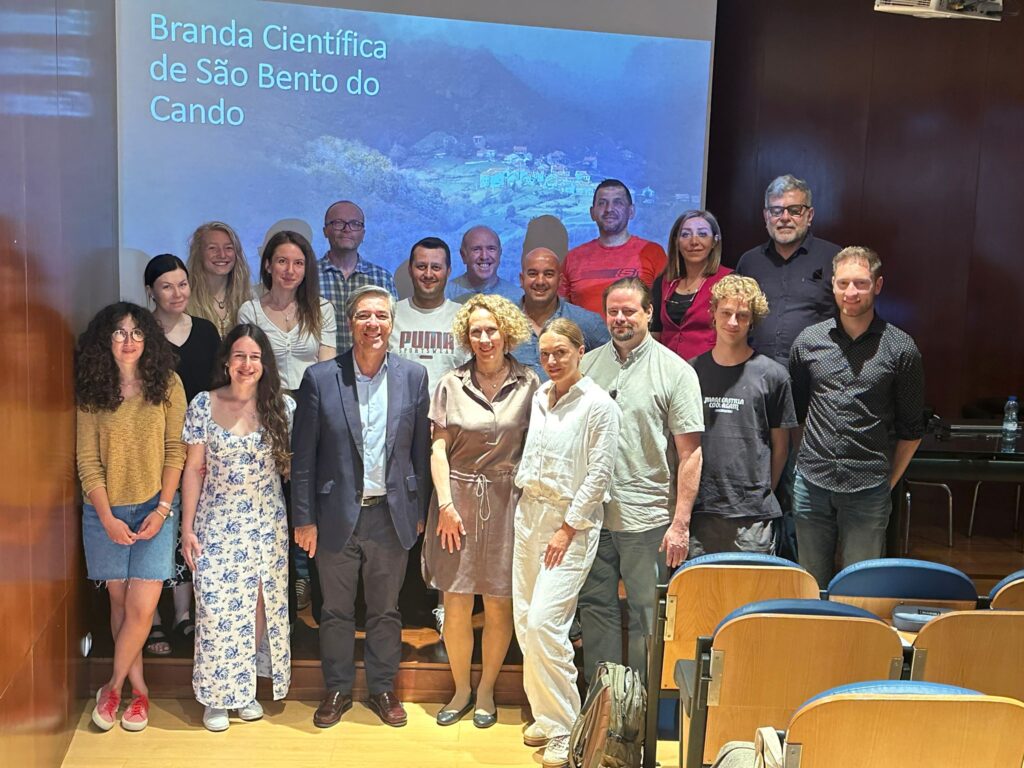
The three-day programme focused on the concepts of socio-ecological periphery traps, mountain systems under global change and innovation pathways for escaping marginalisation. Through a combination of lectures, practical lab sessions, and field-based activities, participants gained a deeper understanding of how social, economic, cultural, and ecological processes interact in mountain territories and how these interactions shape opportunities for transformation.
The Training School began with contributions from local, national and European representatives, highlighting the relevance of mountain areas within broader discussions on territorial cohesion and sustainable development. The first day was officially opened by the European Commission Representative for Research and Innovation, Engineer Carlos Morais Pires and the President of the Municipality of Arcos de Valdevez, João Manuel Esteves. The morning sessions addressed the socio-ecological and socio-economic challenges facing European mountain areas. Prof. Antonio Monteiro (Institute of Geography and Spatial Planning, University of Lisbon) presented the lecture ‘Southern European Socio-Ecological Mountain Systems Under Global Change’, followed by Prof. Juha Hiedanpää from the Finnish Natural Resources Institute (LUKE), who discussed ‘Socio-Ecological Periphery Traps’. Additionally, Dr. Mikko Jokinen (LUKE) explored ‘Recognised Periphery Traps – Problems and Solutions in European Mountainous Areas’, while Dr. Fiona Bakas (Lusophone University – Lisbon University Centre) examined ‘The Role of Small-Scale Events in the Socio-economic Development of Mountain Areas’.
A central learning component of the Training School was the practical laboratory on “Periphery Traps Mapping and Escaping Pathways”. This collaborative exercise, led by Prof. Juha Hiedanpää, Prof. António Monteiro, Dr. Mikko Jokinen, and Dr. Fiona Bakas, allowed participants to apply the concepts introduced during the lectures and explore how different drivers contribute to vulnerability or resilience in mountain territories. Working across disciplines and geographical contexts, participants developed a systemic understanding of territorial challenges and learned how mapping approaches can support the identification of transformation opportunities.
The final day focused on additional methodological approaches for understanding and supporting rural and mountain territories. Professor Theo Lynn (Dublin City University Business School) presented ‘Measuring the Digital Readiness of Cities and Rural Communities: The Urban Digital Readiness Framework’, and Dr. Cláudia Carvalho-Santos (Centre of Molecular and Environmental Biology, Biology Department, Minho University) presented ‘Modeling Tools for Valuing Mountainous Territories’. These lectures on digital readiness in rural communities and modeling tools for valuing mountainous territories introduced participants to innovative methods that can strengthen research on rural transformation and improve the assessment of territorial resources.
The opportunity to engage with different perspectives, from local to European, enabled participants to better understand the broader context of development in mountain regions. Expert lectures introduced participants to key concepts related to mountain socio-ecological systems, including the challenges created by demographic decline, changing land-use practices, economic dependency, and environmental pressures. The sessions provided participants with theoretical frameworks to identify and analyze periphery traps, while also presenting examples of successful strategies and solutions emerging across European mountain regions.
From Theory to Practice: Learning from the Territory
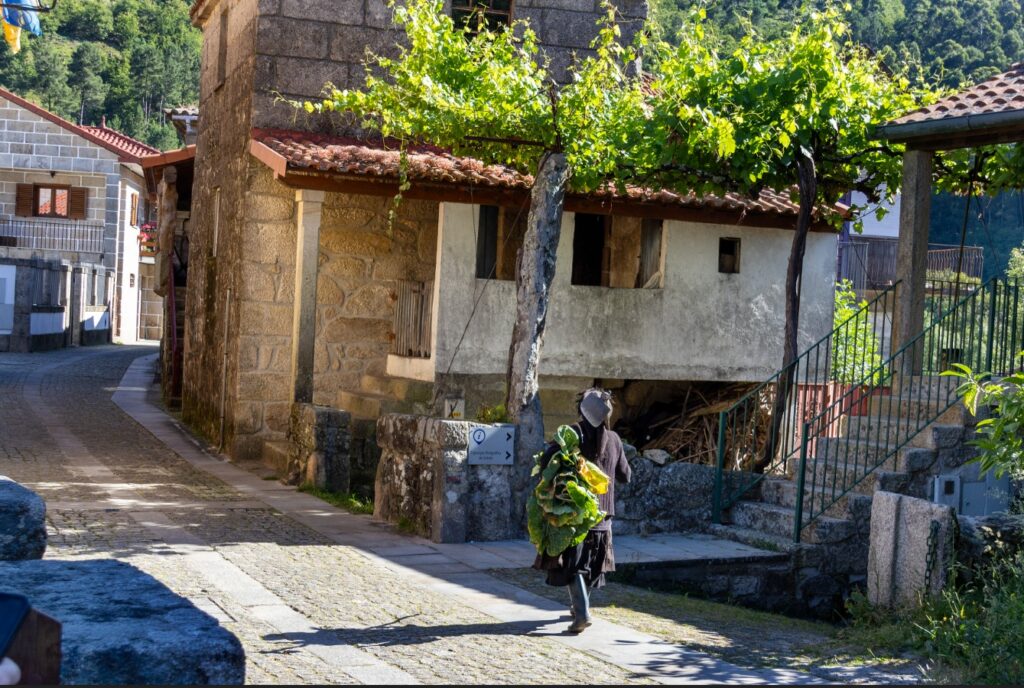
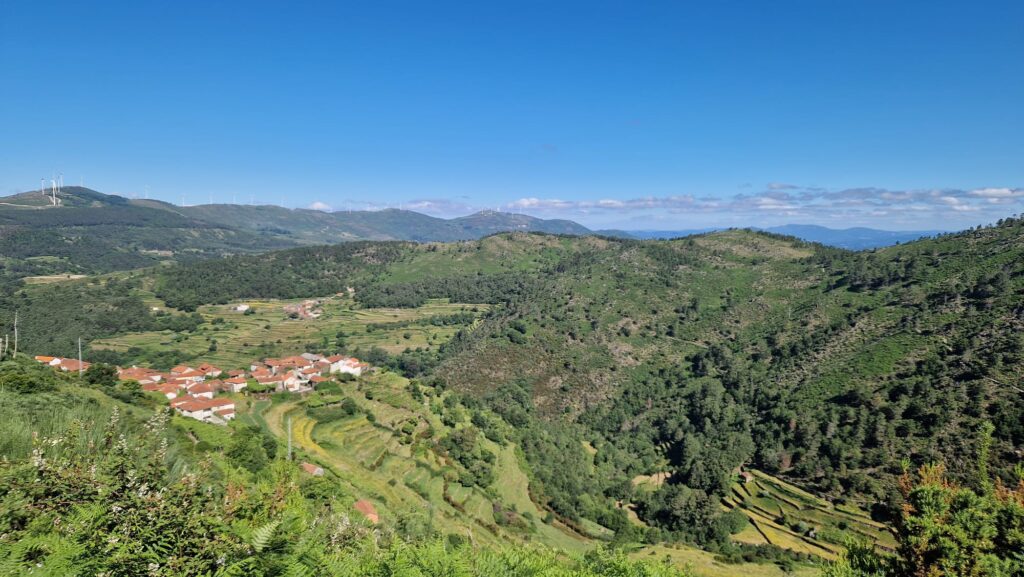
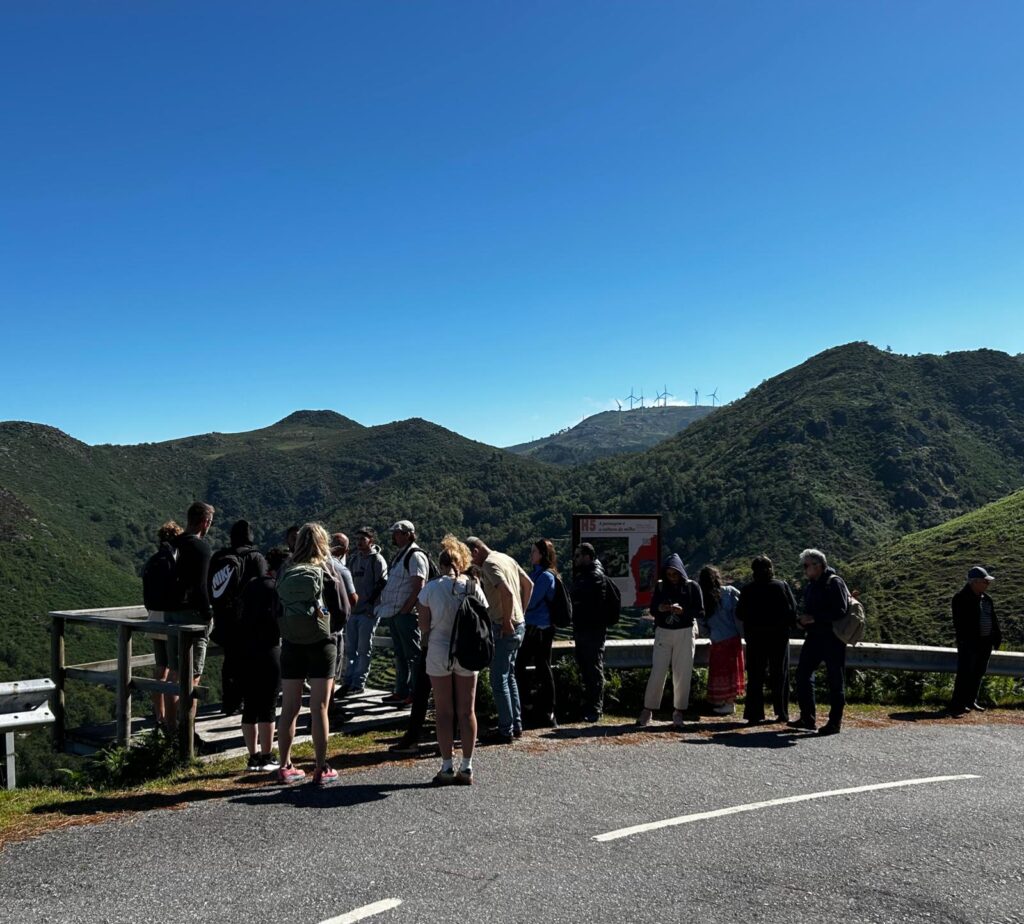
The Training School’s field trip provided an essential opportunity to connect theoretical knowledge with real-world examples. In Sistelo, participants explored high nature value socio-ecological farming systems, discussing the relationships between traditional agricultural practices, landscape management, governance structures, and territorial resilience. During the visit to the Centro Interpretativo da Paisagem Cultural de Sistelo (Sistelo Cultural Landscape Interpretative Center) it was possible to understand that the village of Sistelo stands out for its humanised landscape of terraced fields, which represent an identifying mark and an eco-sustainable way of obtaining agricultural and livestock income. The uniqueness and high heritage value of this place led to its classification as a “Cultural Landscape” and designation as a National Monument, the first of its kind in Portugal, while it was also recognised as one of the “7 Wonders of Portugal” in the Rural Village category. Nevertheless, the streets of this village revealed a harsher reality; this is a territory increasingly affected by rural exodus and depopulation. In recent years, many rural and mountainous regions in Portugal and across Europe have suffered a wave of emigration due to limited economic opportunities and a range of contemporary challenges. This has contributed to persistent territorial marginalisation.
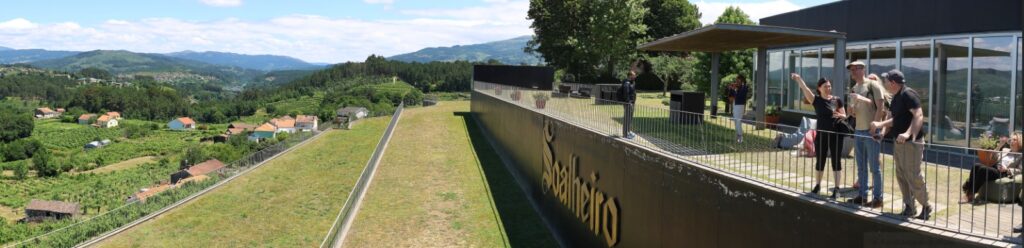
When visiting “Quinta do Soalheiro” located in Alvaredo, in the municipality of Melgaço, participants were confronted with a more positive reality than the one presented earlier. The story of “Soalheiro” began in 1974, when João António Cerdeira, with the help of his parents and wife, Palmira Cerdeira, planted the first continuous “Alvarinho” vineyard in Melgaço. In 1982, the winery was founded, and with it the first “Clássico” wine, which to this day remains a symbol of the brand’s identity. This family business is an example of the way local entrepreneurship and innovation can create alternative pathways for mountain communities, showing how economic initiatives rooted in place-based resources can contribute to overcoming periphery traps. Experiencing these contrasting realities highlighted that, despite the challenges of abandonment, depopulation and marginalisation, rural and mountainous areas also hold significant potential for renewal, with local initiatives and community engagement creating new opportunities and fostering hope for the future.
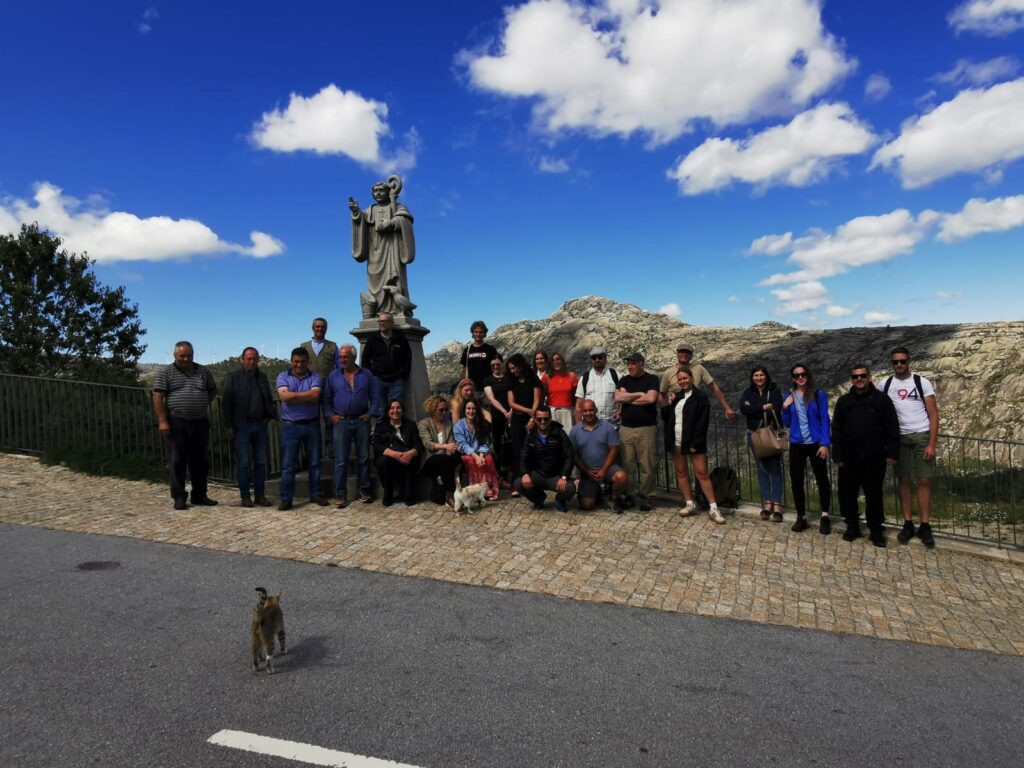
The afternoon was dedicated to a multi-stakeholder forum in Branda de São Bento do Cando, located in the parish of Gavieira, in the municipality of Arcos de Valdevez. This is a traditional seasonal settlement historically used by pastoral communities during the summer months. It reflects the transhuman use and cultural adaptation of mountain environments.
At this location, participants engaged directly with representatives from local communities, public institutions, conservation organisations, and territorial development actors, including representatives of the European Commission, ADERE-PG Local Development Agency, the Common Land Owners Association, the Peneda-Gerês National Park Co-Management Agency, the National Authority for Conservation and Forests, the local church, and the surrounding communities. This dialogue highlighted the importance of collaborative governance and the need to integrate different forms of knowledge when addressing complex challenges in mountain regions.
During the forum, the new “Branda Científica de São Bento do Canto” project was also discussed. This is an international scientific station that aims to support interdisciplinary research in the field of biodiversity and ecosystem restoration in Europe and the sustainable management of natural resources, particularly in the mountain domain. In addition, the station seeks to support research on cultural resources, which form an integral part of the landscape in the spirit of the European Landscape Convention. For participants, the forum provided valuable insights into how research can interact with practice and support locally grounded solutions.
From Experience to Reflection: Insights from the Training School
The MARGISTAR Training School in the Peneda-Gerês Transboundary Biosphere Reserve represented a valuable opportunity for capacity building, networking, and interdisciplinary learning. Beyond gaining knowledge about socio-ecological traps and mountain resilience, participants developed practical skills in systems thinking, stakeholder engagement, participatory approaches and the application of innovative analytical tools. The combination of academic sessions and field-based experiences encouraged researchers to critically reflect on their own work and consider how their research can contribute to addressing real-world territorial challenges.
The international and collaborative nature of the Training School was particularly beneficial for early-career researchers, providing a supportive environment to exchange ideas, discuss methodologies and build connections with peers and senior experts from different countries. These interactions strengthened the MARGISTAR community and demonstrated the value of European research networks in fostering cooperation and knowledge exchange.
By combining scientific perspectives, local experiences and collaborative learning, the first MARGISTAR Training School created a space for participants to better understand the complexity of mountain socio-ecological systems and to explore innovative pathways towards more sustainable, inclusive and resilient mountain futures.